
The Importance of Maintaining Our Vision as We Age
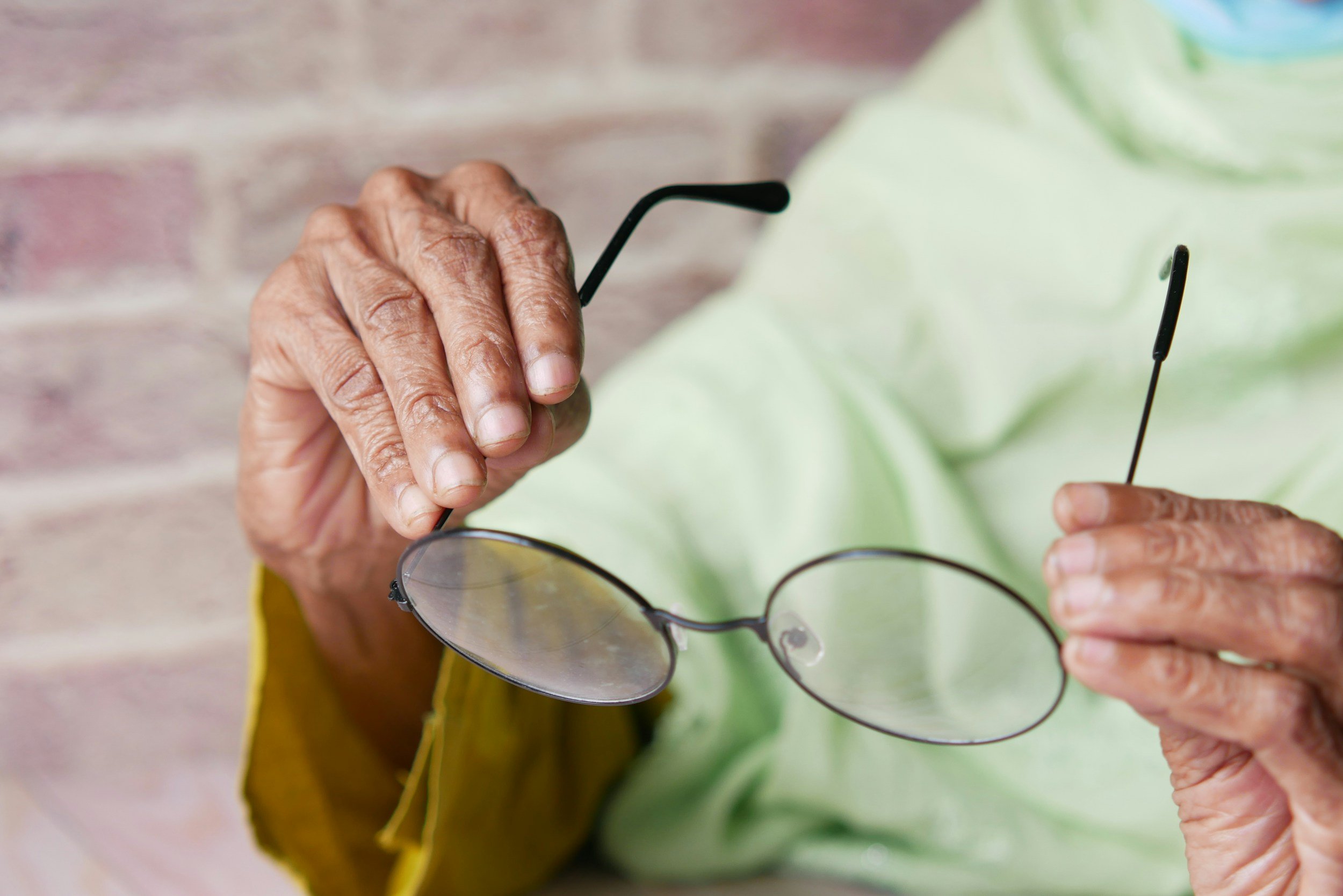
Have you ever noticed the newspaper print appearing more blurry than usual?
Have you found yourself consistently running into objects around your house?
Have you ever had difficulty distinguishing faces?
As summer is tying up its curtains, National Eye Exam Month is celebrated, highlighting the importance of routine eye exams. Aging comes hand-in-hand with increased risk for decreased vision and eye diseases. Even if you aren’t experiencing noticeable vision changes, it’s always worth being proactive when it comes to eye health! For many eye diseases, such as cataracts, glaucoma, and macular degeneration, noticeable changes to vision only occur once the condition has already reached advanced stages. It has been recommended by the American Optometric Association that individuals aged 60+ receive comprehensive eye exams as the best preventative measure in detecting early signs of eye diseases. The American Optometric Association even provides a precise search in finding an eye doctor in areas near you! Seeing an Optometrist/Ophthalmologist yearly helps avoid immediate and more intensive interventions and overall helps aid in long-term eye health. These doctors are also here to offer support and guidance in managing chronic eye conditions to prevent further vision loss. The assessments done by eye doctors can often detect problems with eye health before they even affect vision, and allow enough time to prevent major visual decline. So, in honor of National Eye Exam Month, let's schedule a comprehensive eye exam, as eye health holds a large factor in overall well-being.
Seeing the eye doctor isn’t the only way you can work towards healthy aging, as here are five easy measures to incorporate into everyday life:
Eat Well. See Well.
You can work towards supporting eye function just by focusing on what you put inside your body. The Clewner & Kelly Eye Center emphasizes the importance of having a balanced diet consisting of high concentrations of Vitamins A, C and E as well as omega-3 fatty acids is a key piece in keeping healthy vision. Diabetes has been linked to increased risk of cataracts and obesity is connected to high risk of glaucoma. Controlling your blood pressure by straying away from too many sugary snacks can help prevent damage to blood vessels in the retina (the back of the eye). An article about vision loss by the CDC states that people with diabetes are highly recommended to have their eyes dilated at their yearly eye exam to have these blood vessels checked. This article also indicates that people with high risk for glaucoma, either adults aged 60+ or having a family history of glaucoma, are additionally recommended to have their eyes dilated at every other yearly exam.
Protect Your Eyes in Style
On your way to walk outside? Just grabbing those sunglasses on the countertop is actually taking huge preventative steps against cataract formation. Feel free to even add your own style twist to those shades to feel even more yourself! Be wary that just like styles, sunglasses do get old. An article from Johns Hopkins Medicine stresses the importance of those sunglasses protecting 100% against both UVA and UVB wavelengths as well as that the frames wrap around the sides of your face. Many older sunglasses may not cover all the types of UV that you want, and an upgrade can make a difference.
Vision Thrives on Healthy Choices
Jumping jacks? A walk around the block? Water aerobics? Whatever physical activity calls your name, make sure to sign up! Engaging in physical activity and keeping your blood circulating has profound effects on your entire well-being, including your eyesight. According to the Best Way to Age-Proof Your Vision, “a long-term study of more than 15,000 people found that people who were physically active and drank occasionally experienced less vision loss over 20 years than those who didn’t exercise or drink at all.” Whether that’s a brisk walk, physical therapy sessions, or aquarobics, getting up and moving around as much as you’re able to can help so much more than just your strength and vision!
Many other health decisions can broadly impact our lives beyond the immediate intention. Few people think of smoking affecting vision, but smokers have 4X the risk of developing age-related macular degeneration, the leading cause of blindness in the U.S.
Your Best Friend: the Magnifier
For individuals experiencing low vision levels, the American Optometric Association highly recommends magnifying reading glasses or hand-held magnifiers for reading and more detail-oriented work on a regular basis. Even if you’re only having a little bit of difficulty, magnifier glasses can get you feeling 100% about reading and make so many tasks feel like a breeze. A little trouble can stop many people from doing something every day, so making reading easy again may have a much bigger impact than you might expect. To help improve the quality of everyday life, utilizing accessibility features on your personal phone, e.g. for screen magnification or text-to-speech are very useful measures as well!
Keep Your Eyes on the Road
Does the stop sign seem more like a big red blur? Do the headlights from cars severely impact your ability to drive at night? Driving a car becomes increasingly difficult with age, especially with regard to age-related vision losses. Some tips for safe driving according to the American Optometric Association are to “reduce your speed and limit yourself to daytime driving… take a driving course for seniors… have an annual eye examination,” all working towards maintaining quality of life.
The varying degrees of vision loss that come with age can leave large marks on individuals’ overall health, safety and quality of life. If you are still searching for better vision after seeing the Optometrist/Ophthalmologist for comprehensive eye checks, then you could check out the National Council on Aging’s information on vision rehabilitation. These specialists conduct orientation and mobility training, develop strategies to achieve desirable levels of independence and function with daily tasks, and work towards improving the emotional well-being and confidence of those in need. Vision loss has been linked to increased risk of other medical conditions, as the National Council on Aging ties a connection between a reduced risk for Alzheimer's and other neurodegenerative diseases and making sure eye health is up to date with eye exams, glasses, or necessary corrective surgeries. If vision therapy sounds like something for you, then feel free to check out these three websites: https://www.oib-tac.org/ , https://www.timetobebold.org/ , https://aphconnectcenter.org/visionaware/
Works Cited
“Best Way to Age-Proof Your Vision.” 8 Aug. 2021.
CDC. “Why Eye Exams Are Important.” 21 May 2024.
“How to Link Older Adults to Vision Rehabilitation Services.” 22 June 2023.
“How Can Seniors Maintain Optimal Eye Health?” Clewner & Kelly Eye Center, 10 Oct. 2024, https://clewnerkellyeyecenter.com/ophthalmology-blog/how-can-seniors-maintain-optimal-eye-health/.
“Senior Vision: Over 60 Years of Age.” 2024.
Vail Health Foundation. “Safeguarding Your Vision: The Importance of National Eye Exam Month.” Vail Health Foundation, Aug. 2023, https://vailhealthfoundation.org/news/safeguarding-your-vision-the-importance-of-national-eye-exam-month/gad_source=1&gad_campaignid=23636778897&gbraid=0AAAAACuirEDDH0oPvqQdGWFC_Cr6hHQRQ&gclid=CjwKCAjwyuDTBhB-EiwANCQhLCB17LMze_iyiI4scUHxeMUT_Cqp_95sQPaLu_Dhov1KqOXVu6sp_hoCE7kQAvD_BwE.